
Implant-Retained Overdentures at Mary St Dental Gympie
Mary St Dental provides assessments and treatment planning for implant-supported dentures, also known as implant-retained overdentures, for suitable patients with multiple missing teeth.
Implant-supported overdentures are removable dental prostheses that attach to dental implants placed in the jawbone. They may provide additional retention compared with conventional dentures for some patients.
The degree of improvement varies, and implant dentures are not suitable for everyone. Treatment involves dental implant surgery, healing, ongoing maintenance and potential complications.
Our dentists assess your oral health, jawbone condition, medical history and individual needs before discussing treatment options, potential benefits, risks, limitations and costs.
What Are Implant-Supported Dentures (Overdentures)?
Implant-supported overdentures are removable dental appliances designed to attach to implants using specialised retention components.
They may be considered for patients who have lost most or all teeth in an arch, particularly where conventional lower dentures have difficulty remaining in position.
Lower implant overdentures commonly use two implants, although some treatment plans may require a different number or arrangement depending on individual circumstances.
The implants are placed surgically into the jawbone. Following appropriate healing and assessment, the denture is connected using attachment components.
Unlike a fixed All-on-X restoration, an implant-retained overdenture can be removed by the patient for daily cleaning.
Although the implant attachments may improve retention, the denture can still move during function and may require periodic adjustment, relining or repair.
The implants, surrounding gum tissues and attachment components also require ongoing assessment and maintenance.
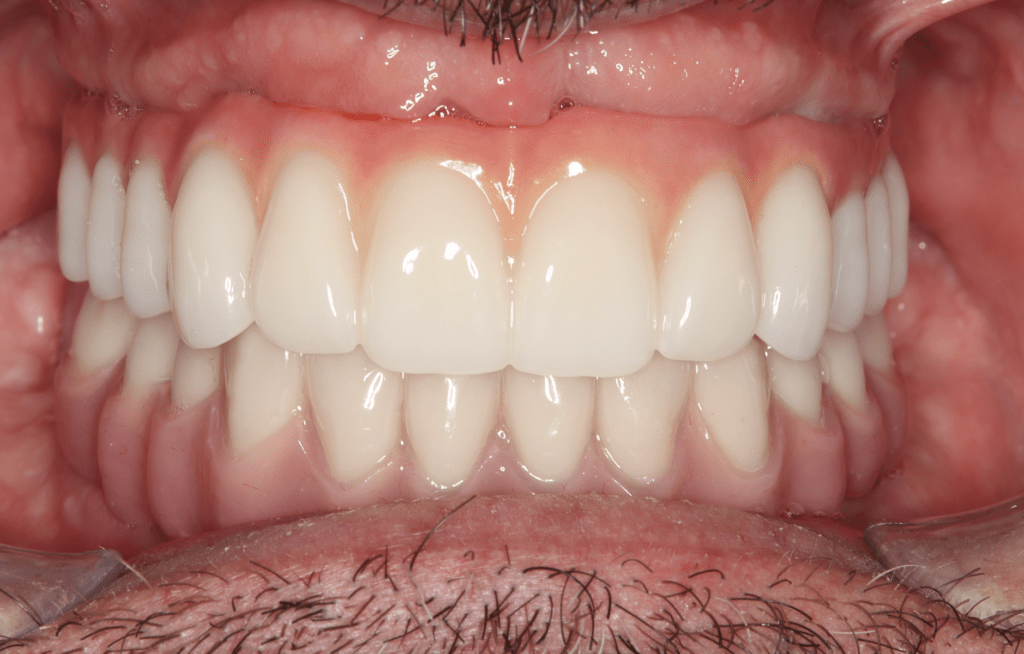
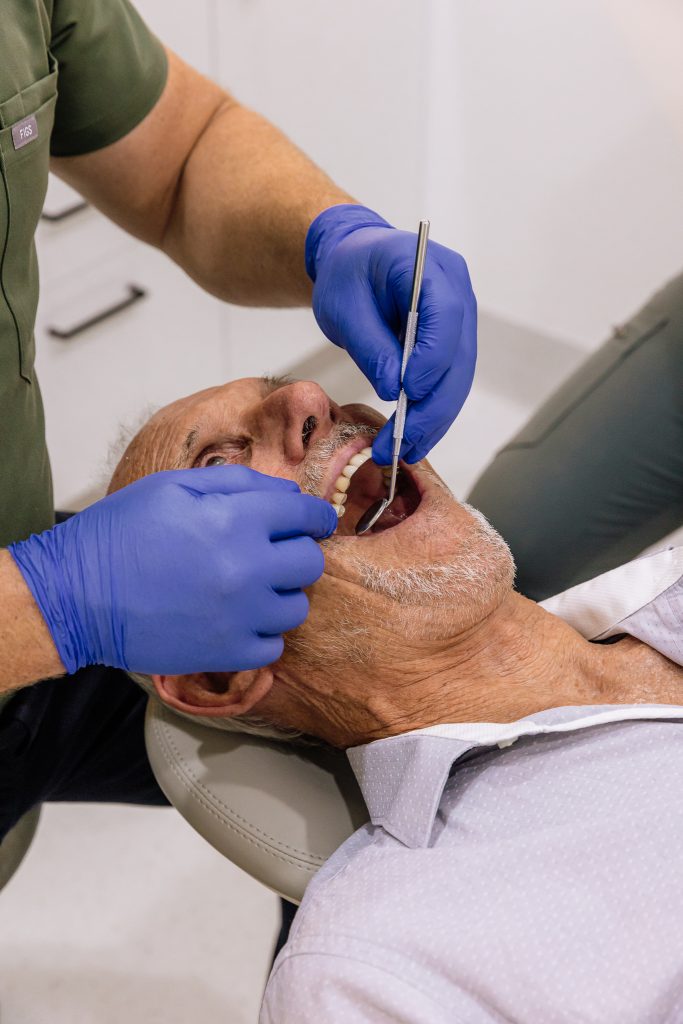
Potential Benefits and Considerations of Implant-Supported Overdentures
Implant-retained overdentures have several characteristics that may be relevant when considering tooth replacement options.
Additional Denture Retention
Implant attachments can provide additional retention for a removable denture.
For suitable patients, this may reduce certain types of denture movement compared with a conventional lower denture.
However, movement, pressure areas and the need for adjustments can still occur.
Chewing Function
Some patients may experience improved chewing function when a lower overdenture has additional implant retention.
The degree of improvement depends on the individual’s oral health, appliance design, bite and other factors.
Implant-supported dentures do not necessarily function in the same way as natural teeth.
Jawbone Considerations
Dental implants interact with the surrounding jawbone and may influence local bone maintenance.
However, implants do not completely prevent changes in jawbone shape or guarantee preservation of supporting bone.
Bone loss may still occur, including around implants affected by inflammation or other complications.
Removable for Cleaning
Implant overdentures can be removed for daily cleaning.
The implants, attachment components and surrounding oral tissues also require careful cleaning and dental review.
Some attachment components wear over time and may need replacement.
Appearance and Denture Design
The denture can be designed with consideration of tooth shape, position and support for surrounding oral tissues.
However, appearance and functional outcomes vary between individuals, and a particular cosmetic result cannot be guaranteed.
Your dentist will discuss the potential benefits and limitations relevant to your circumstances.
The Implant Denture Procedure
Implant denture treatment generally involves assessment, implant placement, healing and fitting of the overdenture.
Consultation and Treatment Planning
Your dentist will assess your teeth, gums, jawbone and existing dentures, as well as your medical history and treatment preferences.
Dental imaging, including 3D cone beam computed tomography (CBCT), may be recommended where clinically indicated.
The assessment helps determine whether implant treatment may be appropriate and whether other tooth replacement options should be considered.
Some patients may require management of gum disease, tooth extraction, bone grafting or other procedures before implant placement.
Mary St Dental provides implant consultation, CBCT scanning and digital planning appointments, subject to confirmation of current inclusions and conditions.
Our reception team can explain the consultation fee and any additional investigation costs before booking.
Implant Placement and Healing
If implant treatment is appropriate, dental implants are surgically placed into the jawbone.
Local anaesthesia is commonly used to help manage pain during the procedure. Other anaesthetic or sedation arrangements may be discussed where clinically appropriate and available.
Postoperative discomfort, swelling, bruising or bleeding may occur.
A healing period is generally required before the implants can support the planned overdenture attachments.
Healing may take several months, although the duration varies. Some implants may not integrate adequately with the surrounding bone and may require additional treatment or removal.
Your dentist will assess implant stability and healing before proceeding.
Fitting the Overdenture
Once the implants are assessed as suitable for restoration, attachment components are fitted and the removable overdenture is connected.
The denture may require adjustments to its fit, bite and retention.
Additional review appointments may be recommended, and attachment components can require replacement over time.
Your dentist will provide instructions for cleaning the denture, implants and surrounding tissues.
Risks and Limitations of Implant-Supported Dentures
Implant-supported overdentures involve dental implant surgery and ongoing use of a removable prosthesis.
Potential risks and complications include:
- Pain, swelling, bruising or bleeding following implant placement.
- Infection or delayed healing.
- Injury to nearby nerves, blood vessels, teeth or other anatomical structures.
- Temporary or occasionally permanent changes in sensation.
- Failure of an implant to integrate with the surrounding bone.
- Implant loosening or loss.
- Inflammation or infection around implants, including peri-implant disease.
- Bone loss around the implants.
- Denture movement, pressure areas or ongoing fit problems.
- Wear, fracture or replacement of denture and attachment components.
- The need for additional surgery, repairs or other treatment.
Factors such as smoking, gum disease, medical conditions, medications and oral hygiene can influence treatment risks and outcomes.
Implant-retained dentures do not guarantee that movement or discomfort will be eliminated.
Long-term maintenance, periodic replacement of components and ongoing dental assessment are necessary.
Your dentist will explain the risks relevant to your individual circumstances before obtaining informed consent.
Alternatives to Implant-Supported Dentures
Implant-retained overdentures are one of several possible approaches to replacing missing teeth.
Depending on your oral health and treatment requirements, alternatives may include:
Conventional Removable Dentures
Dentures supported primarily by the gums and other oral structures, without dental implant surgery.
Fixed Implant-Supported Bridges
For suitable patients, a fixed full-arch restoration such as All-on-X may be considered. This involves different surgical, restorative and maintenance requirements.
Other Restorative Options
Where suitable natural teeth remain, treatment may focus on preserving or restoring those teeth rather than removing them for a full denture.
No Immediate Treatment
In some circumstances, monitoring or delaying treatment may be appropriate after consideration of the potential consequences.
Each option has different costs, possible benefits, risks and maintenance requirements.
Your dentist can explain the available approaches based on your clinical assessment.
Frequently Asked Questions About Implant Dentures
Implant-supported overdentures are not suitable for everyone.
Suitability depends on factors including available jawbone, gum health, medical history, medications, smoking and the proposed restoration.
Some patients may require additional treatment before implants can be considered, while others may be better suited to conventional dentures or another approach.
Treatment generally involves assessment, implant placement, healing and fitting of the overdenture.
Healing commonly takes several months, but treatment duration varies according to bone condition, individual healing and whether additional procedures are required.
Your dentist can provide an estimated timeframe following assessment.
Local anaesthesia is commonly used during implant placement to help manage pain.
Some patients experience tenderness, swelling, bruising or other discomfort during recovery.
Sedation may be considered in selected circumstances, but it does not guarantee a pain-free experience or eliminate surgical risks.
Your dentist will explain the relevant pain-management and recovery arrangements.
Implant-retained overdentures are removed for cleaning.
Daily cleaning of the denture, implants, attachment components and surrounding gum tissues is important.
Regular dental reviews are also required to assess implant health, denture fit and component wear.
Your dentist will provide cleaning and maintenance instructions appropriate to your treatment.
The cost depends on the number of implants, attachment system, denture design and any additional procedures required.
Mary St Dental can provide an individual treatment plan and written quotation following assessment.
The quotation should explain whether fees include the implants, attachment components, denture, diagnostic imaging and any additional treatment.
Payment arrangements may be available, subject to eligibility, applicable fees and the provider’s current terms.
Discuss Implant-Supported Dentures at Mary St Dental Gympie
If you currently wear removable dentures or have multiple missing teeth, Mary St Dental can provide a dental assessment and discuss possible tooth replacement options.
Our Gympie practice welcomes patients from Southside, Monkland, Curra, Glastonbury and surrounding communities.
A consultation provides an opportunity to discuss implant-retained overdentures, conventional dentures and other approaches, including their potential benefits, risks, limitations and costs.
There is no obligation to proceed with implant treatment following an assessment.