
Losing a tooth can be unsettling, affecting your smile and your confidence. A single tooth implant is a permanent treatment that replaces both the tooth’s root and crown, standing alone without impacting neighbouring teeth. In contrast, a dental bridge fills the gap by attaching a false tooth to crowns placed on the adjacent natural teeth, which must first be carefully prepared.
Understanding these differences is the first step toward restoring your smile. This guide explores the three main options for a single missing tooth: implants, bridges, and removable dentures. We will compare their function, appearance, long-term health benefits, and costs to help you make an informed choice.
Let’s look at the best tooth replacement options for your situation in Gympie.
Key Takeaways
-
You have three main options to replace a single missing tooth: a permanent single tooth implant, a fixed dental bridge, or a removable partial denture.
-
Replacing a missing tooth is important for preventing jawbone loss, shifting teeth, and other oral health issues.
-
Each replacement choice has distinct benefits for comfort, aesthetics, durability, and cost.
-
A personalised assessment at Mary St Dental Gympie is the best way to determine which option is right for you.
Jump to section
- What Are Your Options for Replacing a Single Missing Tooth?
- Single Tooth Implant vs. Bridge vs. Denture: Which Is Best for You?
- Is a Single Tooth Implant Right For You? Suitability Factors
- Your Path to a Replaced Tooth: The Mary St Dental Gympie Approach
- Why Early Tooth Replacement Matters for Your Long-Term Health
- Frequently Asked Questions
- Ready to Explore Your Best Option for a Missing Tooth in Gympie?
What Are Your Options for Replacing a Single Missing Tooth?
When you have a missing tooth, understanding your replacement options is the foundation for making a confident decision about your oral health. Each method, whether it’s a single tooth implant, a fixed dental bridge, or a removable partial denture, serves an individual purpose. They differ significantly in how they function, feel, look, and impact your overall health in the long run.
The choice you make will affect everything from your chewing ability to the health of your jawbone and adjacent teeth. Exploring the fundamental characteristics of each treatment is the best way to start the conversation with your dentist about restoring your smile. Let’s break down what each of these popular tooth replacement options involves.
What Is a Single Tooth Implant?
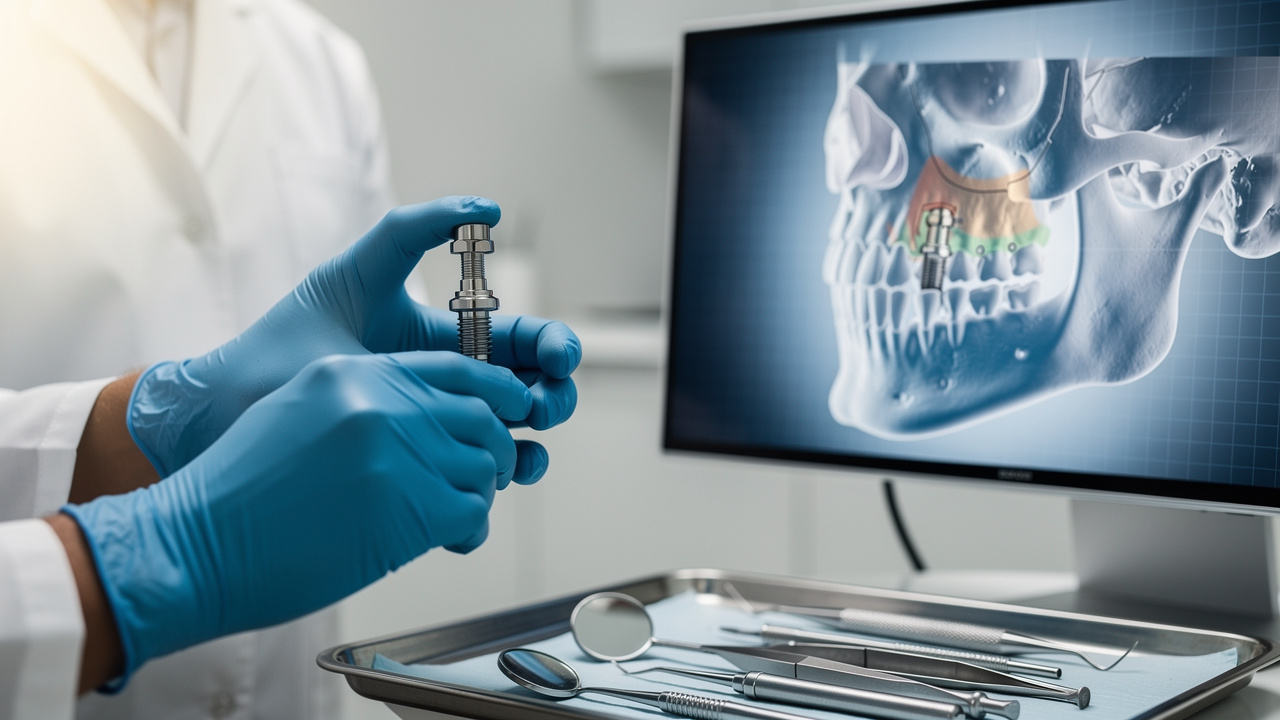
A single tooth implant is widely considered a highly regarded choice for replacing a missing tooth because it mimics a natural tooth’s entire structure. It consists of three key components working together. First, a small, screw-like titanium post is surgically placed into your jawbone to act as a new tooth root. Your body accepts this material, allowing a process called osseointegration where the bone fuses directly with the implant, creating an incredibly strong and permanent foundation.
Once healed, a small connector piece called an abutment is attached to the post. Finally, a custom-made dental crown, perfectly matched to the colour and shape of your surrounding teeth, is secured to the abutment. This self-supporting design means your healthy adjacent teeth are left completely untouched. At Mary St Dental Gympie, we use advanced 3D Cone Beam CT (CBCT) scanning to precisely plan the placement, helping achieve a predictable and successful outcome.
How Does a Dental Bridge Work?
A dental bridge is a fixed restoration designed to literally “bridge” the gap left by a missing tooth. It is composed of an artificial tooth, known as a pontic, which is fused between two dental crowns. These crowns are then placed over the natural teeth on either side of the gap, anchoring the pontic securely in place.
For a bridge to be fitted, the healthy adjacent teeth must be prepared by filing them down to accommodate the supporting crowns, a key pretreatment consideration discussed in the Single tooth implants pretreatment guide published in the Journal of Interdisciplinary Dentistry. This permanent alteration is a significant consideration. Dental bridges are fixed in place and are not removable for cleaning. With excellent oral hygiene, a well-made bridge can provide good function and aesthetics for around 10 to 15 years before it may need replacement.
A dental bridge can be a suitable choice if your adjacent teeth already need crowns or extensive dental work, as it addresses both needs simultaneously. It’s also an option for those who may not be candidates for an implant due to specific health issues or insufficient bone, and who prefer a fixed treatment over a removable denture.
What Is a Removable Partial Denture for One Tooth?
A removable partial denture is a non-fixed appliance created to replace a single missing tooth. It consists of a prosthetic tooth attached to a gum-coloured acrylic base. This base is often held in position by small metal or acrylic clasps that wrap around the neighbouring natural teeth for stability.
As the name suggests, this option is designed to be removed daily for cleaning and overnight soaking. While it is often the most affordable upfront choice, it is generally considered a less permanent or transitional solution. Because it rests on the gums and does not stimulate the jawbone, the bone underneath will continue to change, meaning the denture may need adjustments or replacement every 5 to 10 years.
This option is often considered for those with budget constraints, as a temporary measure, or for individuals who cannot undergo more invasive surgical procedures like implant placement due to medical reasons.
Single Tooth Implant vs. Bridge vs. Denture: Which Is Best for You?
Choosing the best option for your missing tooth requires a careful comparison of how each treatment performs in daily life. Factors like stability, comfort, appearance, and chewing function are just as important as long-term health impacts and maintenance requirements. While one option might seem better on paper, the ideal choice is highly individual and depends on your clinical needs, lifestyle, and priorities.
A single tooth implant, dental bridge, and partial denture each offer a different balance of benefits and considerations. By looking at them side-by-side, you can better understand which one aligns with your expectations for a healthy, functional, and confident smile. This comparison will help guide your discussion with the dental team at Mary St Dental Gympie.
How Do They Compare in Comfort, Appearance, and Chewing?
When it comes to daily function, the differences between these options become clear. A single tooth implant offers the highest level of comfort, as it is fused with your jawbone and feels exactly like a natural tooth. A fixed dental bridge is also generally comfortable once you adapt to it, but it doesn’t provide the same seamless feel as an implant. A removable denture is the least stable and may shift during eating or speaking, sometimes requiring adjustments for a better fit.
Aesthetically, both an implant and a bridge can look very natural, with crowns custom-made to match your smile. However, over time, the bone beneath a bridge can recede, sometimes creating a small gap at the gumline. Denture clasps can occasionally be visible, and the appliance can feel bulkier. For chewing, an implant restores full bite force, a bridge provides good function, and a denture offers significantly less chewing power.
What Are the Long-Term Health and Durability Differences?
The long-term impact on your oral health is one of the most key differences. A single tooth implant is the only option that stimulates and preserves the jawbone, preventing the bone loss that naturally occurs when a tooth root is missing. This helps maintain your facial structure over time. A bridge does not stimulate the bone, allowing it to recede, while a denture can sometimes accelerate this process.
Furthermore, an implant is a standalone option that leaves your neighbouring teeth untouched. A bridge requires preparing two healthy teeth, making them more susceptible to future issues. A denture’s clasps can also place strain on the teeth they grip. In terms of longevity, an implant post is designed to last a lifetime, though the crown may need replacement after 10-15 years. Bridges typically last 10-15 years, and dentures need more frequent replacement, usually every 5-10 years.
Financial Considerations: Single Tooth Implant Cost Australia vs. Bridge vs. Denture
The financial investment for each option varies, both upfront and over the long term. Generally, a single tooth implant has the highest initial cost, a dental bridge is in the mid-range, and a removable denture is the most affordable at the start. At Mary St Dental Gympie, a single tooth implant treatment starts from $5,300.
However, it’s important to consider long-term value. An implant is often the most cost-effective option over a lifetime due to its durability and bone-preserving qualities, which help avoid future complications. Bridges and dentures require recurring replacement costs, and bridges can lead to future dental work on the supporting teeth. To help make treatment more accessible, our practice offers interest-free payment plans through DentiCare and can provide guidance for patients eligible for the Early Release of Superannuation. It is always wise to check your private health insurance policy for any ‘Major Dental’ extras cover. This information is relevant for anyone looking into dental implant cost Australia.
Is a Single Tooth Implant Right For You? Suitability Factors
While a single tooth implant is an excellent choice for many, it’s not suitable for everyone. Successful treatment depends on a combination of factors, including your oral health, overall physical health, and lifestyle habits. A thorough assessment is necessary to determine if you are a good candidate and to plan for a predictable, lasting result, with research such as the Retrospective Study of Functional and esthetic outcomes for single upper central incisor replacements highlighting the importance of patient selection.
Fortunately, even if you have challenges like insufficient bone, modern dentistry offers advanced preparatory procedures to overcome them. Understanding the key suitability factors will help you prepare for your consultation and have a clear picture of what’s needed for a successful implant process.
How Do Bone Levels and Gum Health Affect Implant Candidacy?
Two of the most important factors for implant success are the health of your jawbone and gums. An implant needs a solid foundation, which means you must have sufficient bone height and width to securely anchor the titanium post. If a tooth has been missing for a while, the jawbone in that area may have receded, a process known as resorption.
This doesn’t automatically disqualify you from getting an implant. At Mary St Dental Gympie, we can perform procedures like bone grafting or a sinus lift to rebuild the necessary bone structure. Equally important is your gum health. Your gums must be free from active periodontal (gum) disease, as infection can lead to implant failure. Any existing gum issues must be fully treated before implant placement can begin.
Are There Other Health and Lifestyle Considerations?
Beyond your mouth, your general health and lifestyle play a role in implant suitability. Certain systemic conditions, like uncontrolled diabetes, can affect your body’s ability to heal and may need to be managed before proceeding with surgery. Age is also a factor; implants are only placed once jaw growth is complete, but there is no upper age limit for seniors who are in good general health.
Lifestyle habits are also a consideration. Smoking can reduce blood flow and healing, which increases the risk of implant failure, so quitting is strongly advised. Finally, a commitment to excellent oral hygiene is essential. While an implant cannot get a cavity, diligent daily brushing and flossing are crucial to prevent gum infections around the implant and confirm its long-term success.
Your Path to a Replaced Tooth: The Mary St Dental Gympie Approach
Starting the path to replace a missing tooth should be a clear and supportive experience. At Mary St Dental Gympie, we prioritise precise planning, patient comfort, and comprehensive care, no matter which tooth replacement option you choose. Our goal is to help you feel informed, confident, and cared for at every stage of your treatment.
Our process is built on openness and individual care. From the moment you step into our clinic for your initial assessment to the day you leave with your restored smile, we are dedicated to providing an experience that is as comfortable as it is effective. We combine advanced technology with a compassionate, human touch.
What Happens During Your Initial Consultation?
Your path begins with a comprehensive oral health examination. We take the time to listen to your concerns and goals. To get a complete picture of your oral anatomy, we use advanced diagnostic tools like 3D Cone Beam CT (CBCT) scanning and digital X-rays. These detailed images allow us to precisely assess your bone density, nerve pathways, and sinus cavities, which is especially important for implant planning.
During this appointment, we will have an in-depth discussion about your health history, lifestyle, and budget. Based on all this information, we provide a personalised recommendation for a single tooth implant, bridge, or denture, clearly explaining the pros and cons of each in your specific case. You will receive a transparent, detailed written quote and treatment plan, so you know exactly what to expect.
How Does Mary St Dental Gympie Support Patients with Anxiety?
We understand that dental procedures can cause anxiety for many people. Our clinic is built on a patient-centred philosophy, and our entire team is trained in anxiety management to create a calm, supportive, and unhurried environment. We believe that open communication is key, so we take the time to explain every step and answer all your questions.
To help ensure your comfort, we offer a range of sedation dentistry options. These include nitrous oxide (often called laughing gas) for mild relaxation, oral sedatives for a deeper sense of calm, and IV sedation (or “Twilight” sedation) for those with more significant anxiety. Our gentle techniques and commitment to your well-being help you feel at ease throughout your treatment.
The Implant Procedure: From Placement to Your New Crown
If you choose a single tooth implant, the process is straightforward and well-planned. The first step is the surgical placement of the titanium post into the jawbone, which is done under local anaesthesia for your comfort, a technique also explored in research on Immediate implant placement for single failed maxillary anterior teeth after trauma, published in BMC Oral Health. Following this, there is a healing period of about 3 to 6 months, during which the implant fuses with your bone in the process of osseointegration.
Once healing is complete, we attach the abutment and take highly accurate digital impressions using our intraoral scanners. These impressions are used to create your custom crown, which is carefully crafted to match your natural teeth. At your final appointment, the crown is securely attached to the abutment, completing your new, fully functional tooth and restoring your beautiful smile.
Why Early Tooth Replacement Matters for Your Long-Term Health
Ignoring a single missing tooth might seem like a minor issue, especially if it’s not visible when you smile. However, leaving that gap untreated can set off a chain reaction of oral health problems that are more complex and costly to fix down the line. The structure of your mouth relies on every tooth being present and accounted for.
Promptly replacing a missing tooth is one of the best things you can do to protect your overall oral structure and function, as discussed in the Endodontic and dental implant treatment comparison published in the British Dental Journal, which highlights key considerations for choosing between preserving and replacing teeth. Early intervention with the right choice, whether it’s a single tooth implant, bridge, or denture, helps maintain the harmony of your smile and prevents future complications.
What Happens if a Missing Tooth Is Left Untreated?
When a tooth is lost, the consequences begin almost immediately. Without the stimulation from the tooth root, the underlying jawbone starts to shrink, a process called resorption. This bone loss can eventually alter your facial structure, leading to a sunken appearance. The teeth adjacent to the gap will naturally start to drift and tilt into the empty space.
This shifting creates a bite misalignment, which can cause jaw pain, TMJ issues, and difficulty chewing. The new, awkward spaces created by drifting teeth become traps for food and plaque, making cleaning more difficult and significantly increasing your risk of tooth decay and gum disease in your remaining healthy teeth. What starts as one missing tooth can cascade into multiple dental problems.
How Does Prompt Replacement Protect Your Smile?
Taking action quickly to replace a missing tooth safeguards your entire oral system. A single tooth implant is particularly effective because it is the only option that replaces the tooth root, thereby halting bone loss and preserving your natural facial contours. All replacement options, including bridges and dentures, help maintain your bite integrity by preventing neighbouring teeth from shifting out of position.
By filling the gap, you make daily oral hygiene much easier, reducing the risk of plaque buildup that can lead to decay and gum disease. Most importantly, you restore your ability to eat, speak, and smile with full confidence and function. For emergency situations like a knocked-out tooth, Mary St Dental Gympie offers immediate assessments with Low Dose Digital Radiography to protect your smile without delay. For those searching for a dentist Gympie QLD, we are here to help.
Frequently Asked Questions
Question: Is the single tooth implant procedure painful?
The procedure is performed under effective local anaesthesia, so you should only feel pressure, not pain. For complete comfort, Mary St Dental Gympie offers sedation options like nitrous oxide or oral sedatives. Any post-operative discomfort is typically mild and can be easily managed with over-the-counter pain relief medication.
Question: How long does a single tooth implant take to heal?
The most important healing phase is osseointegration, where the implant fuses with your jawbone. This biological process typically takes between three and six months. During this time, we can provide you with a temporary tooth replacement so you do not have to live with a visible gap in your smile.
Question: Can I get a single tooth implant if I have bone loss?
Yes, many patients with bone loss are still excellent candidates for implants. At Mary St Dental Gympie, we offer preparatory procedures like bone grafting and sinus lifts to rebuild the jawbone and create a strong, stable foundation for the implant. A 3D CBCT scan will help us determine the best approach for you.
Question: How do I care for my dental implant after it’s placed?
You should care for your implant just as you would your natural teeth. This means brushing twice daily, flossing carefully around the implant crown, and attending regular six-monthly check-ups and professional cleans. While the implant itself can’t decay, proper care is vital to prevent gum disease around it.
Question: Does private health insurance cover dental implants in Australia?
Medicare generally does not cover dental implants. However, many private health insurance policies with ‘Major Dental’ or high-level ‘Extras’ cover may offer rebates for parts of the treatment. It’s best to get an itemised treatment plan from us to check your specific entitlements with your health fund. This is important for understanding dental implant cost Australia.
Ready to Explore Your Best Option for a Missing Tooth in Gympie?
Choosing the right way to replace a missing tooth is a significant decision for your long-term health and confidence. A personalised consultation with an experienced dentist is the best way to understand which choice fits your individual needs.
At Mary St Dental Gympie, we combine over 30 years of trusted local experience with advanced technology and compassionate care. We offer customised options, including implants, bridges, and dentures, to help you achieve a healthy, functional smile. Contact us today to book your comprehensive assessment and receive honest, professional advice on restoring your smile. If you’re searching for missing tooth replacement Gympie, dental bridge Gympie, partial denture Gympie, or single tooth implant Gympie, we’re here to help.