
Navigating your child’s early health milestones can bring up many questions for Gympie parents. A common one is determining the best age to start taking kids to the dentist. The clear advice from Australian dental experts is to schedule your child’s first dental visit when their first tooth emerges, or no later than their first birthday.
This early introduction is not about finding problems but preventing them and building a positive foundation for lifelong oral health.
This initial visit, often called a “happy visit,” allows your little one to become familiar with the dental environment in a calm and gentle way. It’s an opportunity for you to receive personalised advice on everything from teething and brushing techniques to healthy dietary habits. Establishing this relationship early helps prevent dental anxiety and makes sure any developmental issues are spotted right away.
Let’s explore what parents in Gympie should know to make this important first step a success for their child.
Key Takeaways
-
Schedule your child’s first dental visit when their first tooth appears, or by their first birthday at the latest.
-
Early dental care helps prevent significant dental issues down the track and builds positive, lifelong habits for children in Gympie.
-
Preparing your child at home with positive language and role-playing can make a world of difference.
-
Mary St Dental Gympie offers gentle, child-friendly appointments designed to be a happy and reassuring experience for your little one.
-
The Child Dental Benefits Schedule (CDBS) can help eligible Gympie families cover the cost of essential dental care.
Jump to section
- When Should Your Child Have Their First Dental Visit?
- Why Is Early Dental Care So Important For Gympie Kids?
- Preparing For A Positive First Dental Experience
- What Happens During Your Child’s First Appointment At Mary St Dental Gympie?
- Essential Home Care & Healthy Habits For Growing Smiles
- Understanding The Child Dental Benefits Schedule (CDBS) For Gympie Families
- Navigating Common Concerns: Emergencies, Anxiety & Ongoing Care
- A Lifetime of Healthy Smiles Starts Here: Partnering With Mary St Dental Gympie
- Frequently Asked Questions
When Should Your Child Have Their First Dental Visit?
Deciding on the right time for your child’s first dental visit is a vital step in setting them up for a healthy smile for life. Top dental authorities provide clear guidance to take the guesswork out for parents. This initial appointment is less about treatment and more about introducing your child to dental care in a positive, preventative setting.
The Australian Dental Association (ADA) and other leading paediatric specialists recommend a child’s first check-up happens very early. This proactive approach helps establish a “dental home,” a familiar and trusted place where your child can feel comfortable. It shifts the focus from fixing problems to preventing them from ever starting, helping to ensure that dental visits are seen as a normal and positive part of staying healthy.
The “First Tooth or First Birthday” Guideline
The “first tooth or first birthday” guideline is the best practice for your child’s first dental visit. This recommendation is based on the goal of preventing a common but serious condition called Early Childhood Caries (ECC), which can develop soon after teeth erupt, as supported by research on oral health among children in early intervention programmes. Bringing your child in by age one allows a dentist to check their new teeth, assess their risk for decay, and monitor the development of their jaw and gums, in line with AAPD best practices for perinatal and infant oral health care.
Many parents believe they should wait until more teeth have come through, but this can allow small, preventable issues to become bigger problems. At Mary St Dental Gympie, we support this early-start guideline because it gives us the best opportunity to partner with Gympie parents. We can provide personalised advice on cleaning tiny teeth, managing teething discomfort, and making healthy diet choices right from the beginning. This early start helps children in Gympie develop a positive relationship with dental care.
Why Is Early Dental Care So Important For Gympie Kids?
It’s a common misconception that baby teeth aren’t as important because they eventually fall out, but this is a significant misunderstanding. Primary teeth play a fundamental role in a child’s overall health and development. They are essential for proper nutrition, speech development, and holding the correct amount of space for adult teeth to grow into.
Early dental care is about protecting these vital little teeth from decay, which can cause pain, infection, and trouble eating or sleeping, and research on age, reason, and experiences regarding first dental visits highlights how early exposure shapes long-term attitudes toward dental health. According to the Australian Institute of Health and Welfare (AIHW), a large number of Australian children experience preventable tooth decay. Early intervention helps avoid this, preventing future complications that could lead to costly and complex orthodontic work. Regular visits to a kids dentist in Gympie can make all the difference.
The Essential Role of Baby Teeth in Child Development
Primary teeth, or baby teeth, are more than just placeholders. Their health directly influences your child’s well-being in several key ways, as outlined in AAPD best practices on developing dentition and occlusion:
-
Nutrition: They help your child chew properly, allowing them to enjoy a varied and nutritious diet that is essential for their growth.
-
Speech Development: They play a critical part in speech development, as the front teeth are needed to form certain sounds clearly.
-
Space Maintainers: Perhaps their most important job is to act as natural space maintainers. Each baby tooth holds a spot in the jaw for the permanent tooth that will follow. If a baby tooth is lost too early due to decay or an accident, nearby teeth can drift into the empty space. This can block the permanent tooth from coming in correctly, leading to crowding and the potential need for braces later on.
Protecting baby teeth through early and regular dental care is an investment in your child’s overall health and future smile.
Preparing For A Positive First Dental Experience
The success of a child’s first dental visit often begins at home, well before you arrive at the clinic. A child’s perception is heavily shaped by their parents’ attitude and the language used to describe the experience. Creating a positive and exciting narrative around the visit can significantly reduce any potential anxiety for your little one, an approach supported by research into the First Dental Steps intervention as a model for building early positive dental experiences.
Your own feelings about the dentist matter a great deal. Children are very perceptive and can pick up on a parent’s nervousness. By staying calm and positive, you signal to your child that the dentist is a safe and friendly place. Framing the appointment as a fun outing or a milestone to celebrate helps build positive anticipation. A gentle children’s dentist in Gympie understands this connection.
How To Talk About The Dentist: What To Say And What Not To Say
The words you choose have a powerful impact. It’s best to use positive, child-friendly language to describe the visit. You can call the dentist a “tooth counter” or a “smile helper.” Describe the equipment in fun terms, like the “magic chair” that goes for a ride or the “tiny mirror” used to see all their teeth.
Parent Tip: “Before the visit, read some happy storybooks about going to the dentist. This helps familiarise your child with the idea in a fun, low-pressure way. Remember to keep your own language light and positive!”
It is just as important to know what not to say. Strictly avoid words with negative associations like “hurt,” “needle,” “drill,” or “pull.” Even trying to be reassuring with phrases like “don’t worry, it won’t hurt” can introduce the idea of pain where it didn’t exist before. Instead, focus on the positive aspects and the friendly people they’ll meet. Watching episodes of kids’ shows where characters have a great time at the dentist can also help familiarise them with the process.
What Happens During Your Child’s First Appointment At Mary St Dental Gympie?
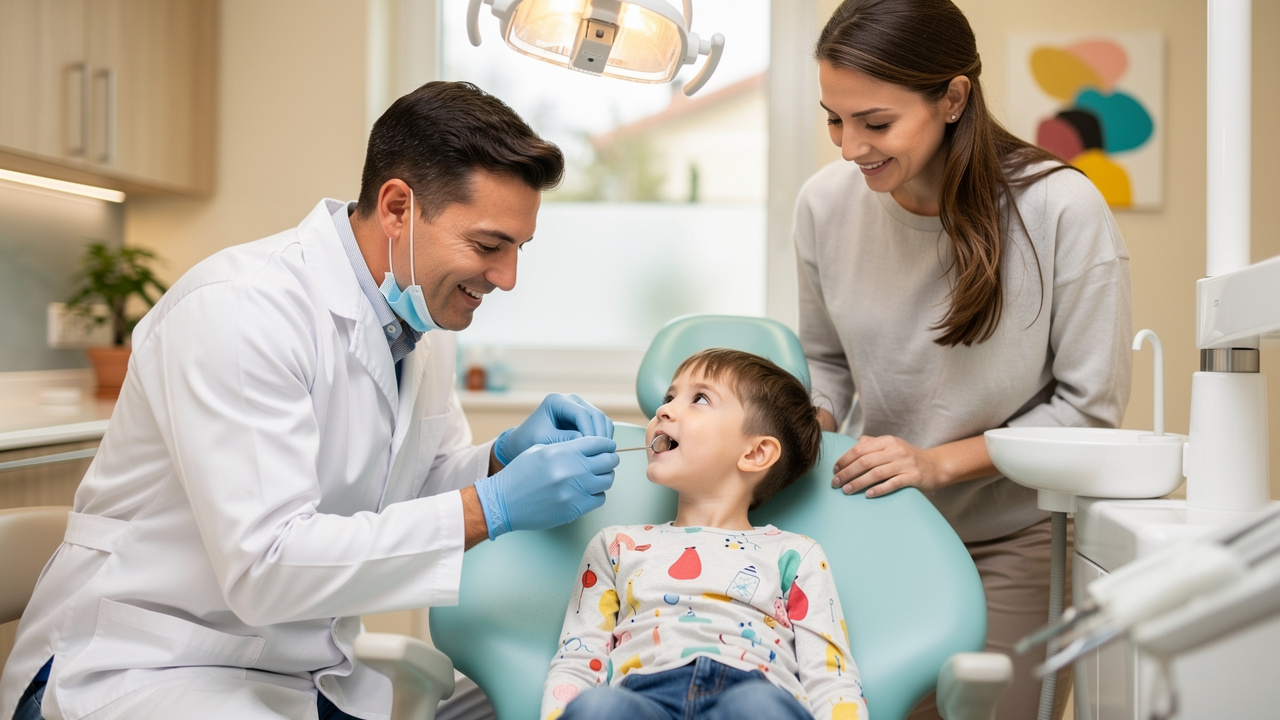
We understand that a child’s first dental visit is an important step, which is why we’ve designed a “Happy Visit” experience focused on comfort, fun, and familiarisation. Our goal at Mary St Dental Gympie is to build a trusting relationship with your child from day one. We never rush and make sure the entire appointment is paced according to your child’s comfort level.
Our approach is centred around proven techniques like the “Tell-Show-Do” method, which helps eliminate fear of the unknown. We create a non-clinical atmosphere where children feel safe and supported, helping to prevent the development of dental anxiety. We want every child to leave our Gympie clinic feeling proud and excited for their next visit with our family dentist in Gympie.
The “Happy Visit” Experience: A Gentle Introduction
Your child’s Happy Visit begins the moment you walk through our doors. Here’s what you can generally expect:
-
Warm Welcome: After a warm welcome, we invite your child to get comfortable with the environment, perhaps by exploring the treatment room or taking a “ride” in the dental chair.
-
Gentle Examination: For very young children and toddlers, we often use the gentle “knee-to-knee” examination technique. This allows your child to sit on your lap, maintaining comforting contact with you while the dentist performs a quick and gentle check.
-
“Tell-Show-Do” Method: We explain everything in simple terms. We’ll show them our “tooth counter” mirror and “Mr. Thirsty” (the suction tool) before we do anything.
-
Simple Assessment: The assessment is simple: we count their teeth, check their gums for health, and look for any early signs of potential issues like decay or developmental concerns.
-
Gentle Clean & Fluoride Discussion: Depending on your child’s comfort, we may perform a gentle clean and discuss a fluoride application.
-
Positive Reinforcement: We always end the visit on a high note with praise and a small prize, making it a truly positive experience for your toddler dentist Gympie visit.
Our team is dedicated to making this first experience as fun and stress-free as possible for your child, whether they are a baby, toddler, or young child.
Managing Anxiety With Our Experienced, Caring Team
Our team at Mary St Dental Gympie is specially trained in child psychology and communication to manage and prevent dental anxiety. We create a calm, supportive, and no-judgement zone for both children and parents. We understand that parents can feel anxious too, and we are here to support your entire family. A positive experience for you helps create a positive experience for your child.
For children who are particularly nervous or require treatment, we offer safe sedation options like Nitrous Oxide, also known as “Happy Gas.” This is a very light and safe way to help a child relax, and its effects wear off just minutes after the appointment ends. Our commitment to a gentle environment extends to all our patients, including adults and seniors who may have their own dental anxieties. We offer flexible appointment times to fit the busy schedules of Gympie families, making us a trusted family dentist in Gympie.
Essential Home Care & Healthy Habits For Growing Smiles
The foundation of a healthy smile is built at home with consistent daily habits. Your dental visits are a chance to get expert advice, but the real work happens every day through brushing and smart food choices. Establishing a solid oral hygiene routine early on is one of the most important things you can do for your child’s health.
Making good dietary choices is just as important as brushing. The frequency of sugar exposure throughout the day has a significant impact on your child’s risk of developing cavities. Partnering with your kids dentist Gympie helps you get the right information on age-appropriate techniques and habits to protect your child’s growing smile.
Brushing & Fluoride: A Guide For Babies, Toddlers & Children
Good oral hygiene should start even before the first tooth arrives. Here’s a simple guide based on Australian recommendations:
-
Before Teeth Erupt: Gently wipe your baby’s gums with a clean, damp cloth after feedings. This removes bacteria and gets them used to having their mouth cleaned.
-
First Tooth to 18 Months: Once the first tooth appears, use a small, soft-bristled baby toothbrush with plain water to brush twice a day.
-
18 Months to 5 Years: You can now introduce a pea-sized amount of low-fluoride children’s toothpaste. You should brush your child’s teeth for them and encourage them to “spit, don’t rinse” afterwards to let the fluoride work.
-
6 Years and Older: Switch to a pea-sized amount of standard fluoride toothpaste. Continue to supervise brushing until your child has the dexterity to do it effectively themselves, usually around age 7 or 8.
Remember, consistency is key, and making brushing a fun routine can help your child embrace good oral hygiene habits.
Nurturing Healthy Eating Habits For Strong Teeth
What your child eats and drinks plays a huge role in their oral health. It’s not just about the amount of sugar, but how often their teeth are exposed to it. Every time your child eats sugary or starchy foods, bacteria in their mouth produce acid that attacks tooth enamel. Constant snacking means their mouth doesn’t have time to recover.
-
Limit Snacks: Try to limit snacks to specific times and offer tooth-friendly options like cheese, plain yoghurt, and crunchy vegetables.
-
Smart Drinks: Be mindful of drinks, too. Water and plain milk are the best choices. Avoid putting your child to bed with a bottle of anything other than water to prevent “bottle rot,” a severe form of decay.
-
Consider Dummy/Thumb Sucking: During your visit, we can also discuss habits like prolonged dummy use or thumb-sucking and their potential impact on jaw development. Early guidance from your children’s dentist Gympie can prevent issues down the line.
Understanding The Child Dental Benefits Schedule (CDBS) For Gympie Families
We believe that every child deserves access to high-quality dental care, regardless of their family’s financial situation. The Australian Government’s Child Dental Benefits Schedule (CDBS) is a fantastic program that provides financial support for essential dental services for eligible children aged between 0 and 17.
At Mary St Dental Gympie, we are proud to support this initiative by bulk billing all eligible services under the CDBS. This means that for eligible Gympie families, there are no out-of-pocket expenses for a wide range of treatments, making it easier to prioritise your child’s oral health without financial stress.
How Does The CDBS Work, And Is Your Child Eligible?
The CDBS provides up to $1,095 in benefits per eligible child over a two-calendar-year period. To be eligible, a child must be aged between 0 and 17 for at least one day of the calendar year, be eligible for Medicare, and be part of a family that receives a relevant government payment, such as Family Tax Benefit Part A.
The schedule covers many essential services, including:
-
Check-ups
-
Cleaning
-
Dental X-rays
-
Fissure sealants
-
Simple extractions
It is important to know that the CDBS does not cover orthodontic treatments like braces or cosmetic procedures. You can check your child’s eligibility through your Medicare online account via myGov. Our team can also help you with this when you visit our family dental clinic in Gympie.
Bulk Billing At Mary St Dental Gympie: Making Care Accessible
To make things simple for local families, Mary St Dental Gympie bulk bills for all eligible CDBS services. This means we claim the benefit directly from Medicare on your behalf, so you don’t have any upfront payments or paperwork to worry about. For eligible treatments, there will be zero out-of-pocket cost up to your child’s benefit cap.
When you book an appointment, our friendly team can help you check your child’s eligibility and available balance on the spot. Our commitment to bulk billing is part of our dedication to removing financial barriers, making sure every child in the Gympie community can receive the foundational dental care they need for a healthy start in life.
Navigating Common Concerns: Emergencies, Anxiety & Ongoing Care
As a parent, you will naturally have questions and concerns that come up as your child grows. From handling unexpected dental accidents to managing anxiety and knowing when to schedule follow-up visits, having a trusted dental partner is invaluable. We are here to provide reassurance and practical guidance every step of the way at our kids dentist Gympie clinic.
After the child’s first dental visit, regular check-ups are essential for monitoring their development and applying preventative care as new teeth emerge. These ongoing visits help reinforce positive habits and allow us to catch any potential issues early. Knowing how to respond in an emergency is also key to protecting your child’s smile.
When Accidents Happen: Handling Paediatric Dental Emergencies
Childhood is full of tumbles and bumps, and sometimes these accidents involve the teeth. Knowing what to do in a dental emergency can make a huge difference. Common emergencies include chipped teeth, a completely knocked-out tooth, or a severe toothache.
-
Knocked-Out Baby Tooth: If a baby tooth is knocked out, do not try to put it back in. This can damage the developing permanent tooth underneath. Instead, control any bleeding and contact us for an assessment.
-
Knocked-Out Permanent Tooth: However, if a permanent (adult) tooth is knocked out, time is critical. Handle it only by the crown (the white part), rinse it gently with milk or saliva if it’s dirty, and try to reinsert it into the socket. If you can’t, place it in milk and seek immediate dental care.
-
Chipped or Sensitive Teeth: For chipped teeth, collect any fragments if possible. If a tooth becomes suddenly sensitive after a knock, it’s also worth getting it checked.
At Mary St Dental Gympie, we offer same-day emergency care to help when you need it most. Don’t hesitate to call us.
Understanding Tooth Sensitivity In Children
It’s common for children to experience some tooth sensitivity from time to time, especially during teething or after losing a baby tooth. However, persistent or sudden sensitivity can be a sign of a deeper issue.
Here are some common causes for tooth sensitivity in children:
-
New Teeth: Newly erupted permanent teeth can be sensitive as the enamel is not yet fully hardened.
-
Cavities: Even small cavities can expose the sensitive inner layers of the tooth.
-
Worn Enamel: Aggressive brushing or acidic diets can wear down enamel.
-
Cracked or Chipped Teeth: Dental trauma, even minor, can expose sensitive areas.
-
Bruxism (Teeth Grinding): Grinding can wear down enamel and lead to sensitivity.
If your child complains of tooth sensitivity, especially to hot, cold, or sweet foods, it’s a good idea to bring them in for a check-up. We can assess the cause and provide appropriate guidance or treatment to help keep them comfortable.
A Lifetime of Healthy Smiles Starts Here: Partnering With Mary St Dental Gympie
Your child’s first dental visit is the first step on a lifelong path to excellent oral health. By starting early and maintaining consistent care, you give your child the gift of a healthy, confident smile. At Mary St Dental Gympie, we are committed to being your partner in this path, providing gentle, family-focused care in a supportive and welcoming environment. We believe that a positive introduction to dentistry can shape a child’s attitude towards self-care for the rest of their life.
We invite Gympie parents to book their child’s first “Happy Visit” with us and establish a trusted dental home for your family. Our team will always provide personalised advice based on your child’s individual needs and our clinical assessment, as online information is general only. We look forward to welcoming your family to Mary St Dental Gympie – your local children’s dentist in Gympie.
Frequently Asked Questions
Question: At what age should a child start using fluoride toothpaste?
For children from their first tooth up to 18 months, you should brush with a soft toothbrush and plain water. From 18 months to 5 years, you can use a pea-sized smear of low-fluoride children’s toothpaste. After age 6, a pea-sized amount of standard fluoride toothpaste is recommended, always with parental supervision to help ensure they spit it out.
Question: Can thumb-sucking or dummy use harm my child’s teeth?
These habits are normal for self-soothing in babies and toddlers. However, if they continue for a long time (past the age of 3), they can affect how the jaw grows and how the teeth align, sometimes causing an “open bite.” We can discuss gentle weaning strategies with you during your child’s check-ups to prevent future orthodontic issues. This is a common concern our toddler dentist Gympie team addresses.
Question: What if my child is really scared of the dentist?
We specialise in making nervous children feel safe and comfortable. Our team uses the “Tell-Show-Do” technique and positive, child-friendly language to build trust. For children who need a little extra help to relax, we offer safe options like Nitrous Oxide (“Happy Gas”) to make their visit a calm and positive experience. Our children’s dentist Gympie team is here to help.
Question: How often should my child visit the dentist after their first appointment?
After the initial visit, we generally recommend a routine check-up every six months. This allows us to monitor your child’s dental development, apply preventative treatments, and reinforce good habits. Depending on individual factors, like their risk for decay, we might suggest a slightly different schedule, which we will personalise for your child.
Question: Does the Child Dental Benefits Schedule cover orthodontic treatments like braces?
No, the CDBS is designed to cover basic and preventative dental services only. It does not include orthodontic treatments like braces, cosmetic dentistry, or any services performed in a hospital. Our team at Mary St Dental Gympie can perform early orthodontic assessments and discuss all available options and payment plans if treatment is needed.