
Struggling with a damaged, chipped, or decayed tooth? You might be wondering about the difference between a dental filling, a crown, and a veneer. A dental filling is a treatment used to repair a small area of a tooth affected by decay or minor damage.
In contrast, a dental crown is a full-coverage cap designed to protect a severely damaged or weakened tooth, restoring its strength and shape. A veneer is a thin, custom-made shell bonded to the front of a tooth, used primarily for cosmetic improvements.
Choosing the right option is important for your oral health and confidence. The best treatment for your damaged tooth depends on the extent of the damage, its location in your mouth, and your personal smile goals. This guide will walk you through each of these tooth restoration options.
Let’s explore which treatment is the perfect fit for restoring your smile.
Jump to section
- What Is a Dental Filling, and When Is It the Right Choice?
- What Is a Dental Crown, and When Is It Essential for Tooth Protection?
- What Is a Dental Veneer, and How Does It Improve Your Smile?
- Crown, Filling, or Veneer: Key Differences and Making the Right Choice
- Your Path to a Restored Smile: The Mary St Dental Gympie Difference
- Restoring Your Smile, Confidently
- Frequently Asked Questions
Key Takeaways
-
Understanding the differences between fillings, crowns, and veneers is important for tooth restoration.
-
The best treatment depends on the extent of damage, tooth location, and cosmetic goals.
-
Fillings are ideal for minor decay or damage, preserving natural tooth structure.
-
Crowns offer robust protection for severely damaged, cracked, or post-root canal teeth.
-
Veneers are primarily cosmetic, improving the appearance of healthy teeth.
What Is a Dental Filling, and When Is It the Right Choice?
A dental filling is a restorative treatment that repairs teeth affected by minor to moderate decay or small fractures. The primary purpose of a filling is to stop decay from progressing by sealing the affected area, preventing bacteria from causing further harm. This procedure restores the tooth’s original shape and function, making it the most common first line of defence against tooth damage. Modern fillings, such as tooth-coloured composite resin, not only provide a functional repair but also offer excellent aesthetic results, blending in with your natural teeth.
At Mary St Dental Gympie, we focus on a conservative approach, aiming to preserve as much of your healthy tooth as possible. A filling allows us to remove only the decayed portion of the tooth, providing a durable and discreet outcome. This method is central to our family-friendly dental care, making certain treatments are as minimally invasive as possible for patients of all ages. By addressing decay early with a simple filling, we can often prevent the need for more complex procedures later on.
Types of Modern Dental Fillings
Today’s dental fillings have moved far beyond traditional metal amalgams, offering materials that are both effective and aesthetically pleasing. The choice of material depends on the location of the tooth and the specific needs of the patient. We prioritise options that provide strength and a natural look.
-
Composite Resin: This is the most popular choice for modern fillings due to its natural appearance. Composite resin is a tooth-coloured material that can be perfectly matched to the shade of your surrounding teeth, making the restoration virtually invisible. It bonds directly to the tooth structure, which provides additional support and requires less removal of healthy enamel.
-
Glass Ionomer Cement (GIC): This material is often an excellent choice for children or for fillings in areas that are not subject to heavy chewing forces. One of its key benefits is that it releases fluoride over time, which helps protect the tooth from further decay. At Mary St Dental Gympie, we often use GIC for our younger patients to provide extra protection for their developing smiles. We also specialise in the safe replacement of old, dark amalgam fillings with these modern, tooth-coloured alternatives.
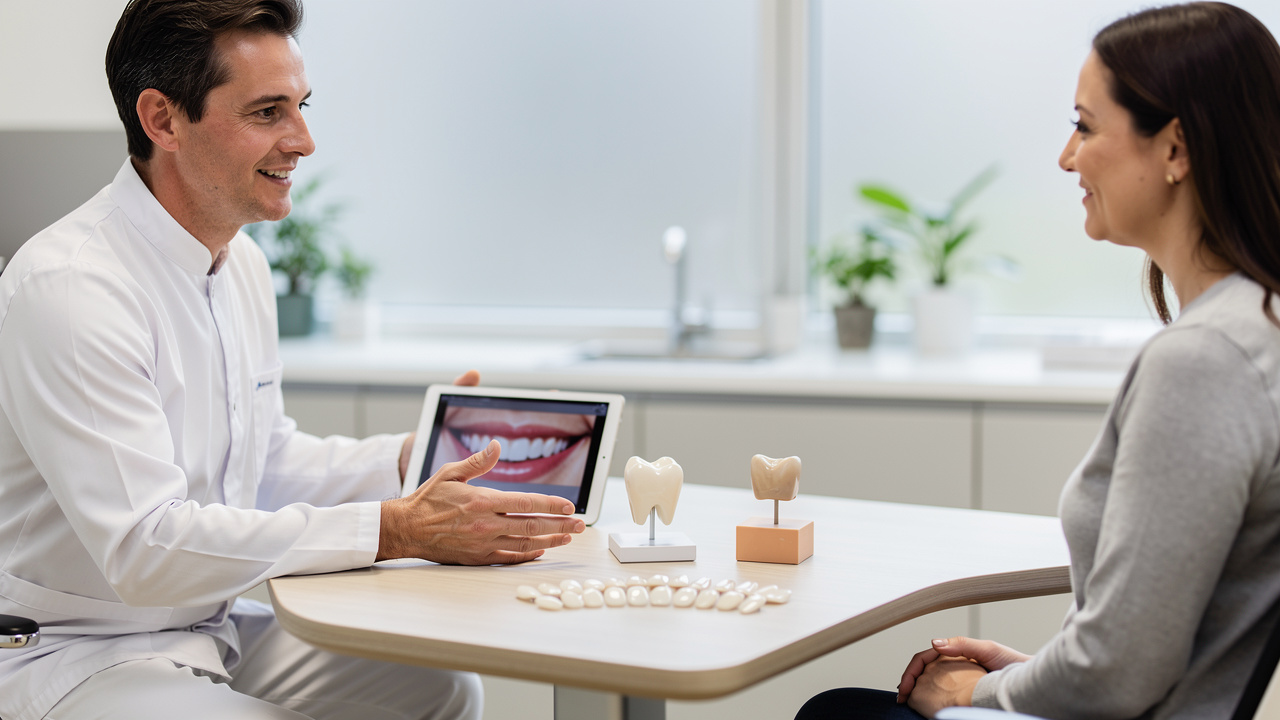
When Is a Dental Filling the Best Option for Your Tooth?
A dental filling is the recommended treatment when the damage to a tooth is limited and its core structure remains strong. It is a highly effective and conservative treatment designed to address problems before they become more serious. By choosing a filling, you are preserving the maximum amount of your natural tooth.
This treatment is ideal for several specific situations. Fillings are perfect for repairing minor to medium-sized cavities caused by tooth decay. They are also used to fix small chips or fractures that haven’t weakened the tooth’s overall integrity. If you have an old, small filling that has started to fail, replacing it with a new one is often the best course of action. The main goal is always to maintain the natural strength and structure of your tooth for long-term health.
What Is a Dental Crown, and When Is It Essential for Tooth Protection?
A dental crown provides full-coverage restoration that completely encases a tooth that has been severely damaged or weakened. Often called a “cap,” a crown acts as a new outer surface, restoring the tooth’s original size, shape, strength, and appearance. This comprehensive protection is vital for teeth that are too compromised to be repaired with a simple filling, especially after a root canal treatment or if the tooth has extensive cracks. A crown effectively holds the tooth together, shielding it from the powerful forces of biting and chewing that could otherwise cause it to break.
Unlike a filling that patches a small area, a crown rebuilds the entire visible portion of the tooth down to the gum line. This makes it an important treatment for making sure the long-term survival of a vulnerable tooth. At Mary St Dental Gympie, we recommend crowns when a tooth’s structural integrity is at risk, providing a durable solution that protects your oral health.
Understanding the Purpose and Materials of a Dental Crown
The primary purpose of a dental crown is to act like a protective case for a compromised tooth. It binds the remaining tooth structure together, evenly distributing the pressure from biting and chewing to prevent further fractures. This reinforcement is what makes crowns the gold standard for saving teeth that might otherwise be lost.
At Mary St Dental Gympie, we offer a variety of high-quality materials to suit different needs and preferences. Zirconia crowns are exceptionally strong and are a great choice for molars that handle heavy chewing. For a balance of strength and aesthetics, Porcelain-Fused-to-Metal (PFM) crowns are a reliable option. We also provide aesthetic all-ceramic crowns that offer a very natural look, perfect for front teeth. A key advantage we offer is our CEREC technology, which allows us to design, create, and place a permanent ceramic crown in a single appointment, saving you time and hassle.
When Is a Dental Crown Necessary for Comprehensive Restoration?
A dental crown becomes the necessary choice when a tooth’s damage is too extensive for a filling to provide adequate support. Placing a very large filling in a heavily decayed tooth can act like a wedge, potentially causing the remaining weak tooth structure to fracture. A crown avoids this risk by covering and protecting the entire tooth.
Crowns are recommended in several key situations:
-
For teeth with extensive decay where a filling would be insufficient.
-
As the best treatment for severely cracked or broken teeth, holding the pieces together and preventing further spread.
-
For severely worn teeth where much of the enamel has been lost, needing full protection.
-
For teeth weakened by root canal therapy, which often become brittle and need protection.
-
To replace large, failing old fillings that threaten the tooth’s stability.
-
As the final restoration for dental implants.
We only recommend a crown when a tooth’s structural integrity is genuinely compromised.
What Is a Dental Veneer, and How Does It Improve Your Smile?
A dental veneer is a very thin, custom-made shell that is bonded to the front surface of a tooth to improve its appearance. Unlike fillings and crowns, which are primarily for restoring damaged teeth, veneers are almost exclusively a cosmetic treatment. Their purpose is to improve the aesthetics of your smile by changing the colour, shape, size, or length of your teeth. They are an excellent choice for addressing cosmetic concerns like minor chips, stubborn discolouration, gaps between teeth, and slight misalignments on teeth that are otherwise healthy and strong.
Think of a veneer as a new facade for your tooth. It conceals imperfections while preserving the majority of your natural tooth structure behind it. This makes it a popular choice for people looking to achieve a significant smile makeover with a minimally invasive procedure. At Mary St Dental Gympie, we design veneers to create a beautiful, natural-looking result that complements your entire smile.
Porcelain vs. Composite Veneers: Which Option Is Right for You?
When considering veneers, you generally have two material options to choose from, each with its own set of benefits. The right choice depends on your cosmetic goals, budget, and timeline. We can help you decide which option will best achieve your desired smile.
-
Porcelain Veneers: These are considered the premium option for cosmetic dentistry. They offer superior aesthetics because porcelain closely mimics the light-reflecting properties of natural tooth enamel. Porcelain veneers are highly resistant to stains and are incredibly durable. At Mary St Dental Gympie, we use precise 3D CEREC scans to design your veneers, which are then expertly crafted by master dental ceramists in Australian labs. The process involves removing a tiny amount of enamel to make certain a perfect fit.
-
Composite Veneers: These are made from the same tooth-coloured resin used for fillings and are a more cost-effective option. Composite veneers can often be applied in a single visit, as the dentist sculpts the material directly onto your teeth. They are ideal for fixing minor chips or imperfections. While they look great, they are not as stain-resistant as porcelain and may need polishing or replacement more frequently. We also offer dental bonding, a quick fix for minor chips using this same composite resin.
How Do Dental Veneers Improve Your Smile?
Dental veneers are a versatile cosmetic treatment that can address a wide range of aesthetic concerns, completely changing your smile. By covering the front surface of the teeth, they create a uniform, bright, and harmonious appearance. This ability to correct multiple issues at once is why they are a cornerstone of modern smile makeovers.
Veneers are highly effective at concealing severe or stubborn discolouration that doesn’t respond to teeth whitening. They are also an excellent way to close minor gaps, known as diastemas, between your front teeth without the need for braces. Veneers can repair minor chips or worn edges, restoring a youthful and healthy look to your smile. For teeth that are slightly misaligned, veneers can create the illusion of a perfectly straight smile. It’s important to remember that veneers act like a “screen protector” for healthy teeth with cosmetic flaws, not as a structural treatment for weak or damaged teeth.
Crown, Filling, or Veneer: Key Differences and Making the Right Choice
Deciding between a crown, filling, or veneer is a clinical decision that depends entirely on the health of your tooth. The fundamental choice comes down to the amount of damage, how much healthy tooth structure remains, and whether your primary goal is to protect the tooth structurally or to improve its appearance. While all three are excellent tooth restoration options, they serve very different purposes. A filling repairs a small part of the tooth, a crown protects the entire tooth, and a veneer improves the look of a healthy tooth.
A professional dental assessment is the only way to be certain which treatment is right for you. During a consultation at Mary St Dental Gympie, we conduct a thorough examination to evaluate the condition of your tooth. We will then explain your options clearly, helping you make an informed decision that makes certain a healthy, long-lasting result for your smile.
When to Choose a Filling: For Minor Damage and Decay
A dental filling is the most conservative and appropriate treatment when the damage to your tooth is minor. It is the best choice for small to moderate cavities or minor breaks that have not compromised the overall strength of the tooth. A filling is ideal when the tooth still has strong, intact walls to support it. The procedure requires less tooth preparation than a crown or veneer, is generally faster, and has a lower cost. A filling is perfectly suited for addressing superficial decay or providing a minor chipped tooth repair, preserving as much of your natural tooth as possible.
When to Choose a Crown: For Structural Protection and Extensive Damage
A crown is the necessary choice when a tooth needs serious structural protection due to extensive damage. This is often the case for teeth with large areas of decay or big, old fillings that are failing. When considering a dental crown vs filling, a crown is better if the tooth is too weak to support a filling. It is also one of the best cracked tooth treatment options, as it binds the tooth together and prevents the crack from worsening. Knowing when a crown is necessary is important, particularly for teeth that have become brittle after root canal therapy. In the debate of dental crown or filling which is better, the crown is superior for durability and withstanding heavy chewing forces on a severely compromised tooth.
When to Choose a Veneer: For Cosmetic Improvement of Healthy Teeth
A veneer is the right choice when your primary goal is to improve the cosmetic appearance of a tooth that is otherwise healthy and structurally sound. It is one of the best chipped tooth repair options when the chip is minor and on a front tooth. Veneers are an excellent part of many cosmetic dental treatment options in Australia, as they can improve the shape, size, and colour of teeth. However, veneers are not suitable for heavily damaged or weakened teeth. In a tooth veneer vs crown comparison, the crown provides structural protection while the veneer is purely for aesthetics. A veneer requires minimal tooth preparation compared to a crown but more than a filling.
Understanding Costs: Dental Crown vs. Filling vs. Veneer Cost in Australia
The cost of dental treatments can vary, and it’s helpful to have a general idea of what to expect. Generally, a dental veneer cost in Australia is the highest of the three options, followed by the dental crown cost, with fillings being the most affordable. The final price is influenced by factors like the complexity of the procedure and the materials used. The tooth filling vs crown cost, for example, reflects the significant difference in preparation and fabrication time. At Mary St Dental Gympie, we believe in transparent pricing and offer interest-free payment plans through DentiCare to make treatment more accessible. Investing in the right treatment early can save you from more complex and costly issues in the future.
Your Path to a Restored Smile: The Mary St Dental Gympie Difference
Choosing the right dental practice for your restorative care is just as important as choosing the right treatment. At Mary St Dental Gympie, we combine over 30 years of trusted local experience with the latest in dental technology to provide care that is both effective and comfortable. We offer a full range of restorative and cosmetic services, from simple fillings to complex full-mouth rehabilitations, all under one roof. Our team is dedicated to providing personalised care in a gentle, anxiety-free environment.
“Early intervention is key to preserving your natural teeth and preventing more complex issues down the track,” advises a local dental professional at Mary St Dental Gympie. “A simple check-up can make all the difference for your long-term oral health.”
We understand that every patient and every tooth is different. That is why our approach is centred on accurate diagnosis and a treatment plan designed specifically for you. Our use of advanced digital technology like CEREC makes certain that your treatment is not only precise but also efficient. We are committed to helping our Gympie community achieve and maintain healthy, confident smiles.
What Happens During a Dental Consultation for a Damaged Tooth in Gympie?
Your path to a restored smile begins with a thorough consultation. During this appointment, we take the time to understand your concerns, whether they involve pain, sensitivity, or the appearance of your teeth. We use advanced diagnostic tools like low-dose digital X-rays and 3D intraoral scanners to get a highly accurate picture of your tooth’s condition.
This detailed assessment allows us to explain your options clearly. We will discuss whether a veneer would be a suitable cosmetic treatment or if a crown is a clinical necessity for your tooth’s health. For cosmetic treatments, we can even use digital mock-ups to help you visualise your future smile. We believe that patient education is key, and we make certain you have all the information you need to make a confident decision. While online information is helpful, a personalised assessment is essential for the best outcome.
Gentle, Anxiety-Free Restorative Care for Gympie Families
We know that dental anxiety is a real concern for many people and can often lead to delaying much-needed treatment. At Mary St Dental Gympie, we have created a calm and supportive environment where your comfort is our top priority. We use an empathetic “Tell-Show-Do” communication style, explaining each step of the process to remove any fear of the unknown.
For patients who need extra support, we offer a range of sedation options. These include Nitrous Oxide (Happy Gas) for mild anxiety, Oral Sedation, and even on-site IV “Twilight” Sedation administered by a qualified anaesthetist for more complex procedures. We are also proud to support local families by offering bulk billing for eligible children under the Child Dental Benefits Schedule (CDBS), making essential services like fillings more accessible.
Beyond the Procedure: Long-Term Maintenance and Emergency Support
Our care for you doesn’t end when your procedure is finished. We believe in helping you protect your dental investment for years to come. We provide detailed guidance on how to care for your new restoration, including proper brushing and flossing techniques to clean around the margins and prevent new decay. Regular check-ups and professional cleans are also important, as they allow us to monitor your restorations for any signs of wear.
We also understand that dental emergencies can happen at any time. A lost filling or a dislodged crown requires immediate attention. That is why we offer same-day emergency dental care in Gympie for chipped, broken, or painful teeth. With our on-site CEREC technology, we can provide quick repairs to prevent further complications and get your smile back to its best.
Restoring Your Smile, Confidently
Choosing between a crown, filling, or veneer is a decision that significantly impacts your oral health and smile. It is a choice best made with professional, personalised guidance from a team you trust. To recap, fillings are for minor repairs, crowns provide essential structural protection for heavily damaged teeth, and veneers are for cosmetic improvements on healthy teeth.
At Mary St Dental Gympie, our expertise and patient-focused care makes certain you receive the most appropriate treatment for your specific needs. We combine advanced technology with a gentle touch to restore your tooth’s health, function, and appearance. If you are in Gympie or the surrounding areas, we invite you to book a consultation for a personalised assessment of your damaged tooth.
Frequently Asked Questions
Question: How Long Do Dental Fillings, Crowns, and Veneers Typically Last?
With proper care and oral hygiene, fillings can last 5-10 years, veneers 10-15 years, and crowns can last 15 years or more. Their longevity depends heavily on your daily habits.
Question: Is the Procedure for a Crown or Veneer Painful?
No, the area is numbed with local anaesthetic to make certain you are completely comfortable during the procedure. At Mary St Dental Gympie, we also offer sedation options for anxious patients.
Question: Can a Chipped Tooth Be Fixed With a Filling, Crown, or Veneer?
Yes, the best option depends on the size of the chip. A minor chipped tooth can be repaired with a filling (bonding) or a veneer, while a larger fracture may require a crown.
Question: Are Ceramic Crowns and Porcelain Veneers the Same Thing?
No. Crowns are thick caps that cover the entire tooth for structural protection. Veneers are very thin shells that only cover the front surface of a tooth for cosmetic improvement.
Question: What Should I Do If My Old Filling Falls Out or My Crown Becomes Loose?
You should contact Mary St Dental Gympie for an emergency appointment immediately. Prompt attention is needed to assess the tooth and re-cement or repair the restoration to prevent further damage.