
Many Gympie kids and adults risk broken teeth in sports like rugby league, AFL, soccer, basketball, boxing and martial arts. For any contact or fast‑moving activity with collisions, falls or hard equipment, children and adults should wear a sports mouthguard every time they play. That includes netball, touch footy, hockey, cricket, softball, BMX, skateboarding, scootering and horse riding.
Sports‑related dental injuries are often preventable when the right protection is in place. Mouthguards for sport help absorb blows to the face, so chipped, cracked and knocked‑out teeth are far less likely.
A professionally fitted custom dental mouthguard from a local dentist gives far better protection and comfort than a loose chemist version. In this guide you will learn why sports mouthguards matter for Gympie families, how custom guards compare with boil‑and‑bite mouthguards, how they protect teeth, jaws and brain, and what to expect at Mary Street Dental in Gympie. You will also find practical tips on caring for your guard and what to do if a sports injury still occurs.
If you or your child plays sport, now is the time to think about protecting your smile before the next season starts.
Key Takeaways
-
Sports mouthguards help protect Gympie children and adults from chipped, broken and knocked‑out teeth during contact and fast‑moving sports.
-
Custom‑fitted guards from a dentist usually fit better, feel more comfortable and absorb impact more reliably than chemist guards.
-
Growing kids, teens with braces, adults with fillings or implants and active seniors all benefit from dentist‑planned sports protection.
-
A custom sports mouthguard visit at Mary Street Dental Gympie is simple, gentle and uses modern digital technology and local dental labs.
-
Daily cleaning, safe storage, regular checks and fast emergency care at Mary Street Dental Gympie keep your sports mouthguard Gympie ready all year.
Why Are Sports Mouthguards Essential For Kids And Adults In Gympie?
Sports mouthguards are essential for Gympie children and adults because many local activities expose teeth, jaws and lips to sudden impacts. According to the Australian Dental Association, about one third of traumatic dental injuries relate to sport and physical activity. When you weigh that against the cost of one custom guard, the value becomes very clear.
Even social games at Albert Park or school sport in the Wide Bay region can lead to accidental elbows, stray balls or heavy falls. Without a protective mouthguard for sport, a single knock can chip enamel, push teeth out of position or damage the jaw joint. For regional families from places like Mary Valley, Kilkivan and Widgee, that can mean unexpected emergency visits and long trips for ongoing treatment.
Understanding the types of injuries that mouthguards help prevent makes it easier to see them as standard sports gear, just like boots and shin pads.
Common Sports-Related Dental Injuries And How Mouthguards Help
Sport can damage teeth and faces in many ways, from small chips to teeth lost completely. These injuries often need fillings, crowns or even implants, and they can affect appearance and confidence for years. A well‑designed dental mouthguard for sport adds a cushioning layer so blows are less severe.
-
Chipped and fractured teeth are very common when a ball, stick or elbow hits the mouth. A hard impact focused on one or two teeth can crack enamel or expose the nerve, which may need root canal treatment and a crown. A snug custom sports mouthguard spreads the force across many teeth so one small area does not take the full hit.
-
Knocked‑out or loosened teeth can happen in football tackles, BMX spills or a clash on the basketball court. When teeth are pushed out of place, treatment is often urgent and may involve splints, repeated checks and sometimes extraction. A protective mouthguard for sport helps keep teeth in position and reduces the chance they are forced from the socket in the first place.
-
Soft tissue cuts and jaw joint strain result when lips, cheeks or tongue slam into sharp teeth, or when jaws collide hard. This can mean stitches, ongoing pain and difficulty chewing. A mouthguard covers sharp edges, including braces, and creates space between upper and lower teeth so the jaw joint is cushioned during a blow.
The emotional and financial load of this kind of trauma often far outweighs the time and cost of a sports mouthguard appointment.
Which Sports And Activities In Gympie Really Need A Mouthguard?
Any sport where faces, teeth or jaws might be hit should be played with a mouthguard. That covers full‑contact games, limited‑contact codes and many high‑speed recreational activities common around Gympie and the Wide Bay region. Research summarised by Sports Medicine Australia notes that players who do not wear a mouthguard can be many times more likely to suffer dental injury.
-
Contact and collision sports in Gympie include rugby league, rugby union, AFL, boxing, Muay Thai, kickboxing, mixed martial arts and hockey. In these games, players expect tackles and heavy contact, so a kids sports mouthguard or adult sports mouthguard is as important as a helmet. Coaches often adopt a simple rule of “no mouthguard, no play” to protect their teams.
-
Limited contact and high‑speed sports such as basketball, netball, soccer, touch footy, cricket, softball, baseball, BMX and mountain biking also carry a real risk. Even if contact is not part of the rules, collisions, falls and fast‑moving balls or bats can still strike the face. Wearing a football mouthguard, cricket mouthguard or custom‑fit mouthguard for boxing in these settings greatly cuts down the injury risk.
-
Recreational and fitness activities in places like Rainbow Beach, Tin Can Bay and Maryborough add extra exposure. Skateboarding, scootering, horse riding, rodeo events, CrossFit‑style training and heavy gym lifting often involve speed, jumps or clenching. A protective mouthguard for sport during these sessions helps shield teeth and soft tissues from surprise impacts.
For both children and adults, if a sport involves speed, hard surfaces or bodies colliding, a mouthguard should be part of the standard kit.
What Is The Difference Between Custom-Fitted And Chemist Mouthguards?
Custom‑fitted sports mouthguards differ from chemist versions in how they fit, how they feel and how well they absorb impact. Stock and boil‑and‑bite mouthguards are quick to buy, yet they often move around, feel bulky and give patchy protection. A dentist‑fitted mouthguard is made to match your teeth and sport, so it stays in place without clenching and gives more even cushioning.
Studies reported in the British Journal of Sports Medicine show that players who wear properly fitted mouthguards have far fewer dental injuries than those who use basic over‑the‑counter guards. For Mary Street Dental Gympie, prevention with a custom‑made mouthguard is far easier than rebuilding damaged teeth later.
Understanding the three main types helps families choose wisely.
Types Of Sports Mouthguards Pros And Cons
Different styles of sports mouthguards suit different needs and budgets, but they do not all protect the same way. In Australia, options usually fall into three groups.
| Mouthguard Type | Fit And Comfort | Protection Level | Typical Use |
|---|---|---|---|
| Stock Ready Made | Loose, bulky, often uncomfortable | Lowest, can move during impact | Last‑minute backup, low‑level social sport |
| Boil And Bite | Home moulded, fit varies with technique | Better than stock, often uneven areas | Short‑term use, growing kids between seasons |
| Custom Fitted By Dentist | Snug, secure, easy to speak and breathe with | Highest, even thickness where needed | Regular training and games for kids and adults |
Stock mouthguards are the basic one‑size versions found in many sports shops and pharmacies. They sit loosely over the teeth, often feel thick and make talking and breathing harder. Because they slip around, impact can still focus on a small spot, which limits protection.
Boil‑and‑bite mouthguards are softened in hot water then pressed into the teeth at home. Fit depends on how carefully they are moulded, and it is easy to bite through the material in places, leaving thin patches. These guards are usually better than nothing, yet they still wear out faster and may not cope with frequent heavy contact.
Custom‑made mouthguards from a dentist, such as those provided at Mary Street Dental Gympie, are created from precise impressions or digital scans. Material thickness is planned to suit the sport, age and level of contact, and the edges are smoothed for comfort. For regular players, this option usually offers the safest mix of fit, durability and shock absorption.
“A professionally fitted mouthguard is one of the simplest ways to cut down the risk of dental trauma in sport.”
— Australian Dental Association guideline on mouthguards
Why A Custom Dentist-Fitted Mouthguard Is Safer And More Comfortable
A custom sports mouthguard locks gently onto the upper teeth so it stays in place without constant clenching. This means jaw muscles can relax, which helps with on‑field focus and may reduce headaches from tight clenching. Because the guard follows your own bite, it also leaves more room for the tongue, so speech and breathing feel more natural.
Key benefits of a custom‑fitted guard include:
-
Better fit and comfort – fewer pressure spots, less rubbing and less temptation to take it out mid‑game
-
Improved breathing and speaking – a lower profile design lets you call plays and communicate clearly
-
More even shock absorption – thickness can be varied where it is needed most, such as front teeth and molars
The dentist can design extra thickness over front teeth, around the jaw joint area and near any heavily filled or root‑treated teeth. Custom guards can also fit around braces, crowns, bridges and dental implants without rubbing or blocking tooth movement. For Gympie locals who have invested in cosmetic veneers or CEREC crowns, this level of protection helps safeguard that work.
Research described by the Australian Dental Association notes that custom‑fitted guards provide better shock absorption than over‑the‑counter versions. At Mary Street Dental Gympie, many patients also use custom‑fit mouthguards for teeth grinding at night. These night appliances look similar but use different materials and designs, so a separate dental mouthguard for sport is still needed for safe play.
How Do Custom Sports Mouthguards Work To Protect Teeth, Jaws And Brain?
Custom sports mouthguards protect teeth, jaws and the brain by absorbing and spreading the force of a blow. Instead of one or two teeth taking the full hit, the guard shares the load across the whole arch. This reduces the chance of fractures, cuts and some jaw‑related injuries.
Mouthguards are usually made from layered ethylene vinyl acetate, shaped over a model of your teeth, and recent work on Exploring Additive Manufacturing for sports mouthguards highlights how fabrication methods continue to evolve to improve protection. The material flexes slightly under impact, which helps slow and soften the force before it reaches teeth and bone. According to the Australian Institute of Health and Welfare, sport and active recreation lead to tens of thousands of injury‑related hospital admissions each year, so even small reductions in severity can make a difference.
Although no mouthguard can guarantee complete protection or prevent every concussion, a well‑fitted design is an important part of a full safety plan that also includes helmets, good coaching and safe techniques.
Mouthguard Teeth Protection What Actually Happens On Impact?
When a ball, boot or fist strikes the face and no mouthguard is present, force travels straight to the teeth and jaw. A small area can receive a very high load, which makes cracks, broken edges and teeth pushed out of position much more likely. Existing fillings or crowns may break, and roots can fracture below the gum where damage is harder to see.
With a custom‑made mouthguard in place, a resilient layer sits between the impact and the teeth. The guard flexes slightly, spreads the force across many teeth and reduces peak pressure on any single point. Correct thickness over front teeth and around the biting edges is important so the guard does not compress too far under load. This approach helps protect fragile, heavily filled, root‑treated, crowned or implanted teeth that might otherwise fail during contact.
Jaw And Concussion Protection What Can A Mouthguard Do?
A blow to the chin or lower jaw can force the mandible sharply upwards, stressing the jaw joints and nearby bones. A sports mouthguard adds cushioning between upper and lower teeth, so when the jaws close suddenly, the force is dampened. This can reduce some jaw joint strain and may lower the chance of certain fractures.
Several studies reviewed in the British Journal of Sports Medicine suggest that properly fitted mouthguards can reduce some concussion‑related forces by acting as a shock absorber. The guard can limit extreme jaw movement during a fall or tackle, which may reduce how much force reaches the base of the skull. Helmets, coaching and rule changes all still play key roles, yet a good‑quality guard is a simple step parents and players in Queensland can take right now.
For Gympie families, that means a custom sports mouthguard is not only about saving teeth, but also about supporting safer play for the brain and neck.
How Do Custom Mouthguards Support Children, Teens, Adults And Seniors Differently?
Custom sports mouthguards support people at different life stages in different ways. Children and teens need guards that can keep up with growing jaws and changing teeth. Adults, seniors and veterans often have fillings, crowns, bridges or implants that need strong protection during contact or falls.
At Mary Street Dental Gympie, the team looks after families from Gympie, Glastonbury, Mary Valley and beyond, so they see all these needs daily. Custom guards can be adjusted or remade as mouths change, and designs can be planned to work alongside orthodontic or restorative treatment. This makes a dentist‑fitted mouthguard a sensible long‑term plan rather than a once‑off gadget.
Kids’ And Teen Sports Mouthguards Protecting Growing Smiles
Children’s mouths change quickly as baby teeth fall out and adult teeth erupt. A children’s sports mouthguard should be checked at least once a year, and often each season, to be sure it still fits snugly. If the guard becomes tight, distorted or starts sitting unevenly, it is time for a review and often a fresh kids sports mouthguard.
Many Gympie schools and clubs now expect students to wear a mouthguard for kids’ sport in rugby, AFL, hockey, basketball and similar codes. Teens in braces have extra risk because brackets and wires can cut lips and cheeks during a knock. A custom‑made mouthguard planned to fit over orthodontic appliances protects both the soft tissues and the braces, while still allowing teeth to move as planned. Fun colours, team designs and names built into the guard help kids feel proud to wear their gear.
Mary Street Dental Gympie focuses on gentle, child‑friendly care, with time to explain things in simple language and show equipment before it goes near a mouth. Eligible families can also use the Child Dental Benefits Schedule, which helps make preventive visits and mouthguard checks more affordable.
Tip for parents: “Treat the mouthguard just like boots and a water bottle – it goes to every training and every game.”
Adult Senior And Veteran Mouthguards Protecting Restorations And Long-Term Oral Health
Adults often return to sport through social touch footy, netball, basketball, masters rugby or gym boxing classes. Teeth at this stage may already have fillings, crowns or past injuries that are more likely to crack during contact. A well‑designed adult sports mouthguard can be shaped around these restorations to spread force and keep them intact.
Seniors in the Gympie and Wide Bay region stay active through golf, bowls, social walking groups and sometimes higher impact sports or horse riding. Many also have dental implants, bridges or partial dentures that represent a big investment. A custom‑made mouthguard planned around this work protects both the teeth and the surrounding bone. Veterans with Department of Veterans’ Affairs support may have old trauma or reconstructive work that needs special care, and a sports mouthguard Australia‑wide is strongly recommended in these situations.
Mary Street Dental Gympie works regularly with seniors and DVA cardholders and offers HICAPS claiming, DentiCare and Zip Pay options. That way, families can fit important protective care into their budget without delaying.
What Happens When You Get A Custom Sports Mouthguard At Mary Street Dental Gympie?
Getting a custom sports mouthguard at Mary Street Dental Gympie is a simple, low‑stress process. The team uses modern digital technology where suitable and gives clear explanations at every step. For anxious patients, the focus is on gentle care, short visits and, when needed, options like nitrous oxide to make treatment easier.
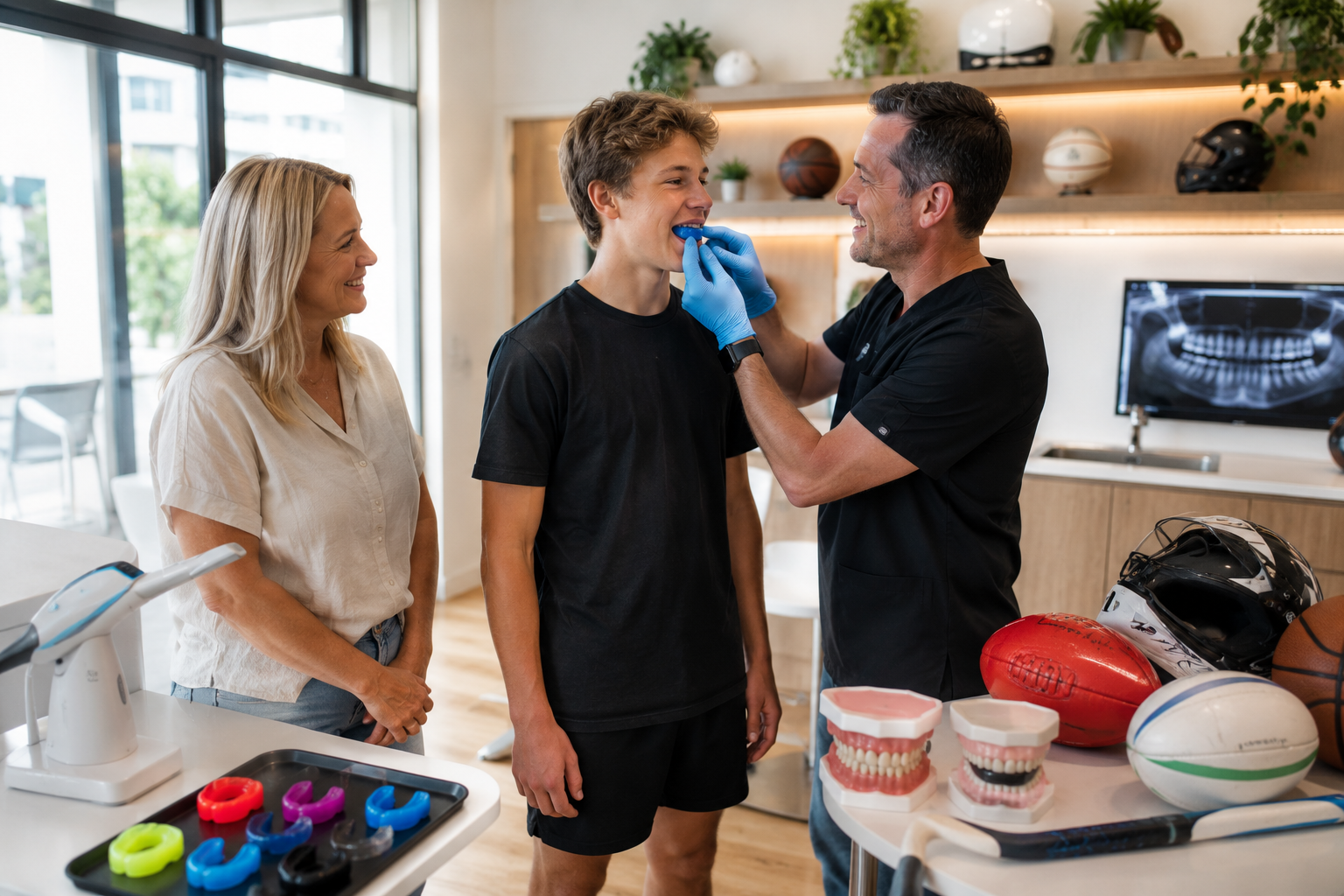
Most people need two appointments for a custom sports mouthguard. First the dentist checks your teeth, gums and bite, then records accurate impressions or scans. After the guard is made in a quality Australian lab, you return for fitting and fine‑tuning.
Step-By-Step From First Visit To Wearing Your Custom Sports Mouthguard
The process for a custom sports mouthguard is designed to be straightforward for busy Gympie families. Understanding the steps ahead of time often helps reduce worry for anxious children and adults.
-
Initial Check And Chat
The dentist examines your teeth, gums and jaw joints to confirm they are healthy enough for a guard. Any sharp edges, broken teeth or active decay are noted so they can be treated later if needed. You talk through which sports you play, how often you train, your age and any previous injuries. -
Impressions Or Digital Scans And Planning
The team takes detailed moulds or digital scans of your upper teeth, and sometimes the lower teeth as well. These records capture the exact shape of your mouth so the guard fits closely. Thickness and design features are then planned to match your sport, for example extra front padding for a boxing mouthguard or football mouthguard. -
Lab Fabrication And Quality Checks
The records go to a trusted dental laboratory in Australia, where technicians use special pressure‑forming machines to build up layers of material. They trim and polish the edges so they feel smooth against cheeks and gums. The finished guard is sent back to Mary Street Dental Gympie for final checking. -
Fitting, Adjustments And Care Instructions
At the fitting appointment, the dentist checks that the guard clicks into place firmly but comfortably. Any tight spots are adjusted, and breathing and speech are tested while you talk. You receive clear instructions on inserting and removing the guard, cleaning it, storing it safely and when to return for review.
How Mary Street Dental Supports Anxious Patients And Families
Many adults in Gympie feel nervous about dental visits, especially if they have not seen a dentist for years. Children may worry about new sounds and tools, even for something as simple as a mouthguard fitting. The team at Mary Street Dental Gympie understands this and works hard to create a calm, kind environment.
Appointments run at an unhurried pace so there is time to ask questions or take a short break. Staff use a “tell, show, do” approach with kids, explaining each step, showing the materials, then gently carrying out the task. For very anxious patients or those with a strong gag reflex, options like nitrous oxide happy gas can be discussed when other care is needed.
A mouthguard visit is often a good first step for people rebuilding confidence in dental care. You leave with something immediately useful for sport, while also re‑establishing a positive relationship with a local team that offers full preventive, restorative and emergency treatment.
How Do You Care For Your Sports Mouthguard And When Should You Replace It?
Good daily care keeps your sports mouthguard clean, fresh and ready to protect you at every training session and game. A well‑looked‑after guard is more comfortable to wear and less likely to harbour bacteria. Regular dental reviews at Mary Street Dental Gympie then help confirm the fit and catch any early wear or damage.
Caring for a sports mouthguard is quick once it becomes part of your usual post‑training routine. Simple steps around cleaning, drying and storage make a big difference to lifespan and hygiene.
Daily Care Cleaning And Storage Tips
A simple home routine helps your mouthguard stay safe to use and last longer. Families often keep a small kit with a case and spare toothbrush in the sports bag.
-
Clean straight after use so saliva and debris do not sit on the surface. Rinse the guard in cool or lukewarm water, never hot, as heat can distort the plastic. Gently brush it with a soft toothbrush and mild soap, taking care around the edges. Rinse again until no soap remains, then place it on a clean surface to dry.
-
Dry and store the guard correctly to stop mould and warping. Allow the mouthguard to air‑dry fully before putting it into its case, otherwise moisture can build up. Choose a rigid container with small air holes so air can circulate but the guard is still protected from bumps. Avoid leaving it loose in school bags, boots or car dashboards, where it can be crushed or overheated.
-
Keep everything hygienic to protect your mouth. Try not to chew on the guard, as this creates rough spots where bacteria can collect and weakens the material. Wash the storage case regularly with soap and water and let it dry fully between uses. For kids who share sports bags or change rooms, this simple cleaning helps reduce the spread of germs.
When To Have Your Mouthguard Checked Or Replaced – And What To Do In An Emergency
Mouthguards do not last forever, especially in growing mouths. Children and teens usually need a new guard every 12 to 18 months, or sooner during growth spurts or after orthodontic changes. Adults often get several seasons from a custom guard, as long as it is cared for well and not chewed.
Signs that your guard needs a review include:
-
Cracks, tears or sharp edges
-
Thin areas where the colour has faded or looks flat
-
Warping or a loose, wobbly fit
-
Discomfort or rubbing that was not there before
If you notice any of these, bring the guard to your next check‑up at Mary Street Dental Gympie, or book a quick review visit. Mouthguard checks fit easily into routine preventive appointments and help catch small issues before they turn into failures during contact.
Even with the best guard, accidents sometimes happen. If a tooth is chipped, rinse the mouth gently and keep any fragments in milk to take to the dentist. If a permanent tooth is completely knocked out, hold it by the crown, gently rinse it, try to place it back in the socket, or store it in milk and seek urgent dental care.
Mary Street Dental Gympie keeps same‑day emergency spots aside so injured players from Gympie, Maryborough or Tin Can Bay can be seen quickly and offered clear, evidence‑based options to repair damage.
In Summary
This summary brings together the main reasons custom sports mouthguards matter for Gympie children, adults, seniors and veterans. Contact and high‑speed activities such as rugby league, AFL, boxing, netball, soccer, cricket and BMX place real stress on teeth and jaws. A well‑fitted guard reduces the chance of chips, breaks, tooth loss, soft tissue cuts and some jaw‑related injuries.
Compared with stock or basic boil‑and‑bite mouthguards, dentist‑fitted guards offer a closer fit, better comfort and more reliable shock absorption. They can be planned around braces, crowns, bridges, implants and dentures, and they usually last longer when cared for properly. For families across Gympie, Mary Valley, Kilkivan and Rainbow Beach, that means fewer surprises and more confidence on the field.
Mary Street Dental Gympie brings decades of local experience, modern technology and a gentle, family‑focused style of care. The team provides custom‑fitted sports mouthguards alongside night guards for grinding, routine check‑ups and full emergency support.
If you or your child is getting ready for rugby, AFL, netball, basketball, boxing, cricket or BMX, now is the perfect time to organise proper protection.
Book your custom sports mouthguard fitting at Mary Street Dental Gympie before your next sporting season starts.
Call (07) 5482 2688 or visit marystdental.com.au to arrange an appointment at 208 Mary Street, Gympie.
Protect Your Smile Before the Next Game
A custom-fitted sports mouthguard is one of the simplest and most effective ways to help protect your teeth, jaw and smile from preventable sporting injuries. Whether you play rugby league, AFL, netball, basketball, hockey, cricket, martial arts or another active sport, the right mouthguard can make all the difference when an accident happens.
Before the next season begins, book a custom sports mouthguard fitting at Mary Street Dental in Gympie. Our experienced team will create a professionally fitted mouthguard that’s comfortable to wear, allows you to breathe and speak naturally, and provides reliable protection so you can play with confidence.
Frequently Asked Questions
Question: Are Custom Sports Mouthguards Really Better Than Boil-And-Bite Ones?
Yes, custom sports mouthguards generally protect better than boil‑and‑bite guards. They fit more snugly, do not need constant clenching and give more even thickness where impacts are likely. This improves comfort, breathing and speech, and helps avoid the high costs of repairing even one broken tooth.
Question: How Much Does A Custom Sports Mouthguard Cost At The Dentist?
A dentist‑made mouthguard usually costs more than a chemist version but far less than fixing a serious sports injury. Many private health funds pay part of the fee under extras cover. Mary Street Dental Gympie uses HICAPS so rebates are claimed on the spot, and the team always explains fees and options before treatment.
Question: How Long Does A Dentist-Made Mouthguard Last?
For adults, a custom sports mouthguard often lasts several seasons if sport is weekly and the guard is cared for well. Children and teens usually need new guards every 12 to 18 months because their jaws and teeth are still changing. Any cracked, thin, warped or loose guard should be checked and replaced promptly.
Question: Can I Use My Night Guard As A Sports Mouthguard?
No, a night guard is not suitable for contact or fast‑moving sport. Night appliances for grinding are usually thinner and made from harder material designed for sliding, not heavy impact. A separate protective mouthguard for sport is needed to cushion blows properly. Your dentist can provide both if you grind and also play sport.
Question: Do Children With Braces Need A Special Mouthguard For Sport?
Yes, children and teens in braces need a mouthguard designed to fit over brackets and wires. A custom orthodontic mouthguard reduces cuts to lips and cheeks and helps prevent broken brackets during contact. As teeth move, the guard should be reviewed regularly by the dentist or orthodontist and replaced when the fit changes.
Question: When Should My Child Start Wearing A Mouthguard For Sport?
A child should start wearing a mouthguard as soon as they play any sport where bumps to the face are possible. That includes junior rugby, AFL, soccer, basketball, hockey and even school‑based games with balls or sticks. Building the habit early, and booking before each season, helps keep growing smiles safe.
Question: How Do I Book A Custom Sports Mouthguard At Mary Street Dental Gympie?
Booking is easy. Phone Mary Street Dental Gympie on (07) 5482 2688 or visit marystdental.com.au to request an appointment. Try to book before winter football codes, summer cricket or new training programs begin, and consider bringing the whole family so everyone’s mouthguard and dental check‑up can be done together.